Background
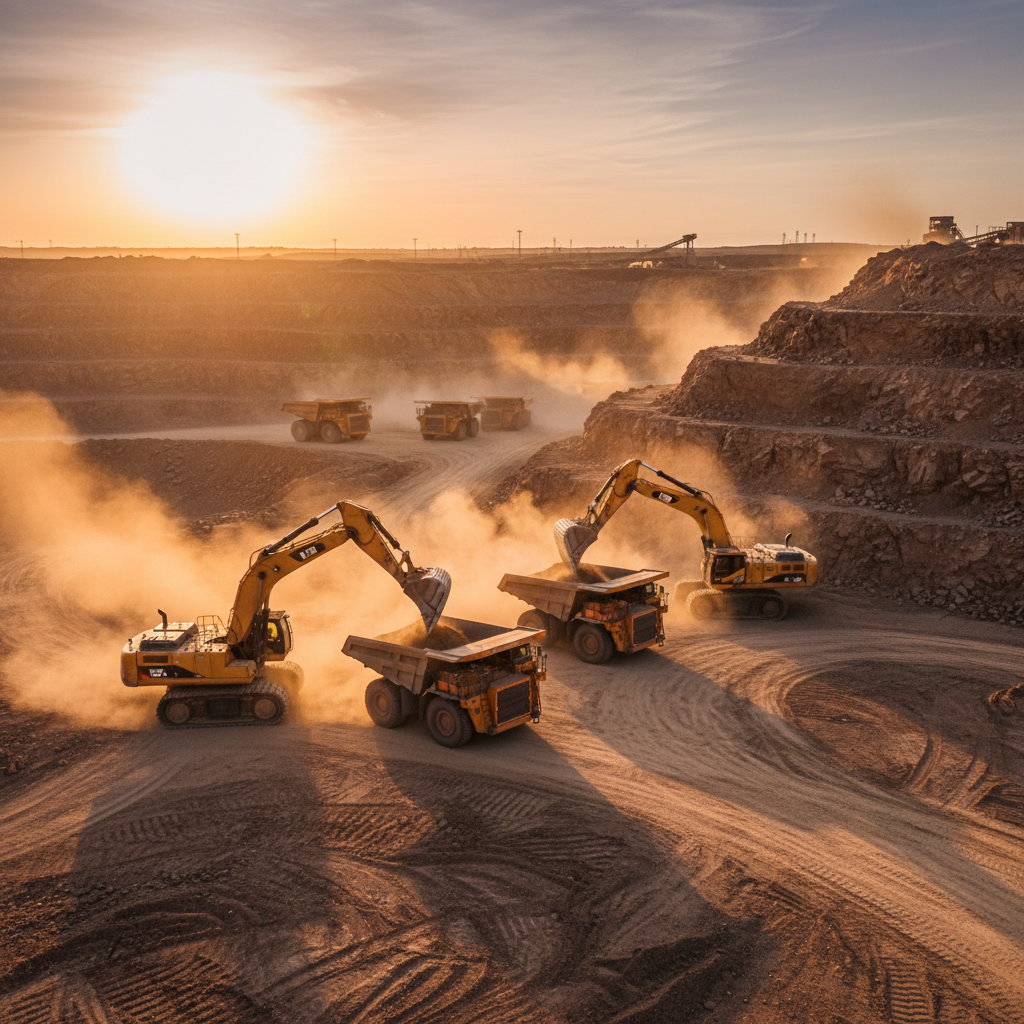
The Earth Moving Division of the Taavura Group operates large fleets of heavy equipment across quarries and infrastructure sites throughout Israel. Operations run at high intensity, around the clock, and depend entirely on equipment availability and the ability to deploy crews continuously and in a coordinated manner.
"If I don't have the number of machines I need, I simply can't meet my targets." — Hagai Shenar, Deputy CEO, Taavura Earth Moving Division
The Challenge: Information That Exists — but Doesn't Create Control
Before Opsima, Taavura did not lack operational information — but the "operational picture" was not always clear to everyone. Breakdowns, repairs, and updates were constantly communicated via phone calls and highly active WhatsApp groups.
However, there was a significant gap between what was happening in the field and the ability to understand the situation in real time.
"Events happen right now, but documentation and handling happen at completely different speeds." — Hagai Shenar
- There was no single source of truth
- Every management meeting began by re-mapping the fleet
- Site managers and division leadership were not always looking at the same picture
"It was very difficult to get the real operational picture." — Hagai Shenar
Business Impact
In operations at this scale, uncertainty becomes a business problem. Without clear operational data, it is difficult to know in real time whether the division is actually meeting its targets — and why.
"It used to feel like the weather — some months better, some months worse." — Hagai Shenar
This uncertainty impaired the ability to analyze performance, understand operational gaps, and improve processes in real time.
Why Other Solutions Didn't Work
In the past, Taavura tried conventional solutions: ERP integrations, service ticket workflows, and additional fleet management systems. But experience showed that any solution that added friction and required significant effort from field personnel for reporting — failed.
"We told ourselves: another system just won't work." — Hagai Shenar
The Solution: Opsima EquipmentOS
Opsima approached the problem from a different angle. Instead of changing the field — it learned the field. The system connected to existing reporting channels, first and foremost WhatsApp, and transformed unstructured information into structured operational data automatically.
"No one needs to feed the system — it feeds itself." — Hagai Shenar
No forms. No new workflows. No additional burden on people.
Real-Time Control of Fleet Availability
One of the first values Opsima delivered was clarity. For the first time, Taavura could see the status of every machine at any given moment.
"Today, I know exactly what my availability rates are." — Hagai Shenar
From Availability to Actual Utilization
In the next phase, telematics data was added. The focus moved from theoretical availability to actual work performed.
"It's not enough that a machine is available — it's important to me that it's actually working." — Hagai Shenar
Operational KPIs That Drive Change
The data exposed small gaps with major impact — such as delayed shift starts.
"Fifteen minutes of delay sounds like nothing, but over a year, that's hundreds of thousands of cubic meters." — Hagai Shenar
Since these are hours that are already paid for, the improvement represents real gains with no additional investment.
"Since launching EquipmentOS, I no longer tell the site manager, 'Last week you were missing 30 hours of output.' I tell him — yesterday you were missing half an hour of output." — Hagai Shenar
Preventive Maintenance and Control
Opsima added a layer of maintenance oversight: service tracking, alerts, and assurance that no machine is forgotten.
"All of this technically existed before — but there was no control." — Hagai Shenar
Today, all excavators are monitored and maintained on time, with no delays.
Implementation: A System That Learns the Organization
The implementation didn't include IT projects, training sessions, or any process changes. People continued working as usual, while the system gradually learned the language and context.
"They didn't need to learn a new language — they just had to be a little more precise." — Hagai Shenar
"If I understood what they meant — the AI will understand it too." — Hagai Shenar
Looking Ahead
The next step for Taavura is tying different data points collected around breakdowns, downtime, and costs.
"I want to know whether I made money today — and if not, why." — Hagai Shenar
Summary
Opsima did not replace systems or change how work is done in the field. It turned existing information into control.
"Before, I felt it. Now, I know." — Hagai Shenar